
ABOUT
Systems that compound your results, not your workload.
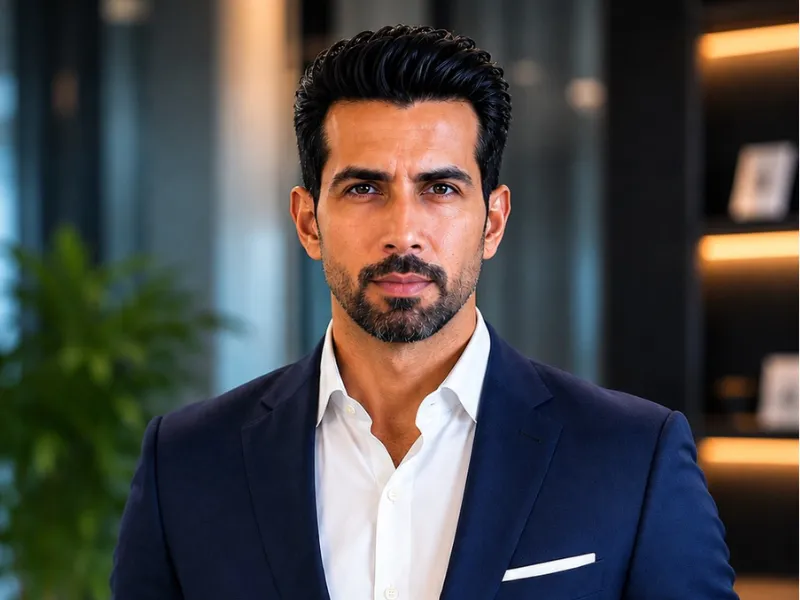
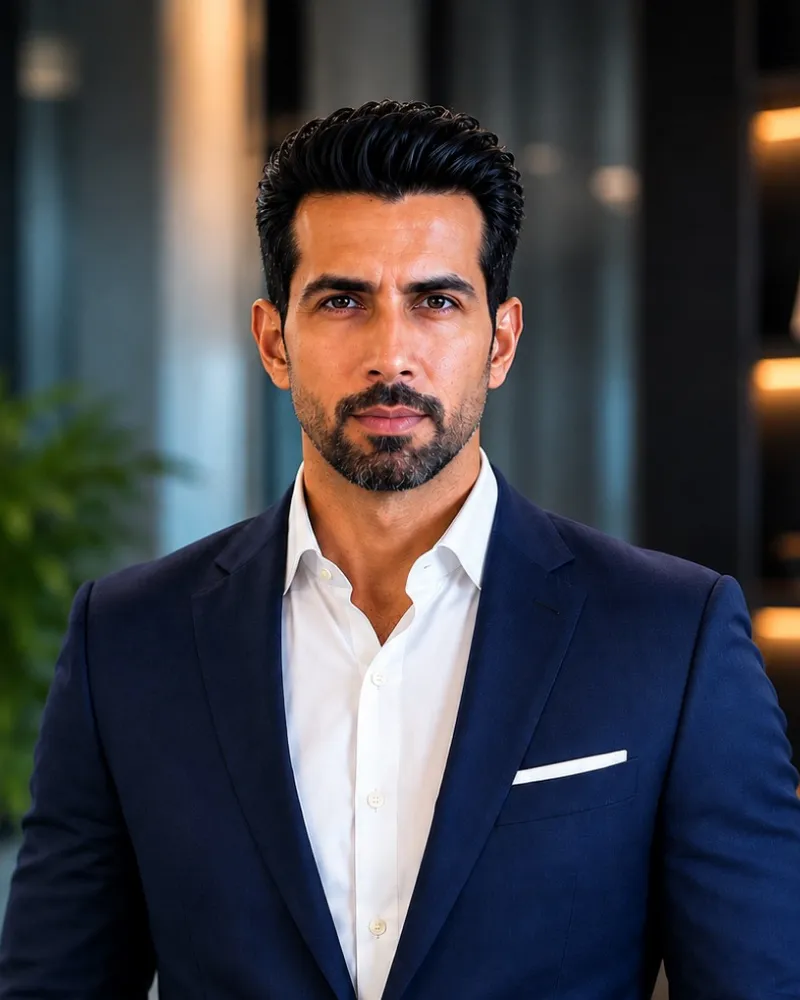
I'm Syed Jawad Ul Haq. I diagnose why a business's revenue is capped and I build systems that removes that cap. I came to this through economics, then through seven years inside organisations, and only then through marketing, which is the reverse of the usual route, and the reason I see the problem differently.
HOW I GOT HERE
Three fields, one question.
Economics & Finance.
I studied economics and finance because I wanted to run a business, not because I wanted to work in finance. My father ran an outdoor advertising agency, so ownership always looked more interesting to me than a career. What economics and finance gave me was a habit rather than a subject; the assumption that output can be traced back to inputs, and that anything worth arguing about can eventually be priced.
HR & Organisational Development.
I spend seven years in human resources and organisational development. That is not where people expect a revenue consultant to have started, and it is the reason I see the problem differently from most of the people who work on it. That work puts you inside a business rather than in front of it. You see the roles, the handovers, the processes, and the places where accountability is assumed rather than assigned.
Marketing.
Eventually I wanted to be closer to the number. Organisational work is real work, but it's contribution to revenue is argued rather than demonstrated; I wanted to contribute in a way that could be measured. So I moved into marketing, lead generation, sales, and revenue while working directly with founders for the last ten years.
Different field, same question everytime.
What is this business actually doing, as opposed to what everyone believes?
THE LESSON
A business will describe itself far more confidently than it can define itself.
When you encode a company's operations into a system, every vague process has to become an explicit one. That is when you find how much of the business was running on assumption. A process everyone agreed on in a meeting turns out never to have been agreed. A step everyone believed was happening turns out to depend on one person remembering. A rule that governs real money turns out to exist nowhere except in somebody's head.
None of that surfaces in a conversation with the owner, not because anyone is being dishonest, but because the owner is describing the business as designed, not as running. Those are two different businesses, and the gap between them is where the money goes.
I now apply the same discipline to revenue.
A structured assessment of all ten capabilities that produce revenue, scored the same way for every business, so the answer does not bend to whoever happens to be telling the story.
WHY THE FRAMEWORK EXISTS
I kept being hired to fix demand in businesses whose problem was somewhere else.
Marketing is where founders bring the symptom, because it is the part of the machine they can see. So the brief was nearly always the same: we need more leads to scale.
Often it was not sure. The leads already existed and died in the follow-up. Or they converted and the customers left inside a year. Or the whole thing rested on the founder personally and would not have survived being doubled. I could run the campaign, hit the number in the brief, and leave the business no more capable at the end than it had been at the start.
It was the pattern I already knew from organisational work, arriving from a different direction. The failure sat between the functions. It belonged no nobody, so nobody defended it, and it never appeared on any one department's report.
What was missing was not effort or ideas. It was an instrument. So I built the method I wanted to be held to. Ten capabilities that produce revenue, in dependency order. A hundred statements, ten per capability, scored the same way for every business, in the same sequence, every time. The instrument is fixed so the finding cannot bend; not the client's story, and not to what I would prefer to sell.
Economics taught me to price a gap. Organisational development taught me where to look for it. Marketing taught me what it costs when it stays open.
No one of those three produces this practice. The order does.
POINT OF VIEW
Five things I've stopped arguing about.
A stall is a symptom with an unseen cause.
The felt problem is nearly always "not enough leads" or "not enough sales", because those are the parts the owner can see. The cause is usually somewhere else.
Revenue performs at the level of your weakest capability, not the average of them.
Which is why a business can be excellent at four things and still be stuck.
Revenue leaks at the seams between functions.
Between marketing and sales. Between sales and delivery. Between delivery and renewal. Intergration is not an efficiency exercise. It is revenue.
Diagnose before you prescribe.
A perfect solution to a wrong problem is still as loss, and it costs you the time and the confidence the right fix would have earned.
Campaigns rent results. System own them.
A campaign gives you a spike and then ends. A capability raises the baseline permanently, and makes every campaign after it more productive.
A NOTE ON AI
I watched businesses fail this test before it was called AI.
For seven years I watched capable people underperform inside businesses that had never defined what they were meant to be doing. Then I watched those same businesses hand undefined work to software and expect a different outcome. AI is that test again; running faster, and costing more.
Encoding a business into a system exposes whether the business is defined. AI does exactly the same thing, and it does it at a speed that removes the chance to notice what's going on.
Most businesses buying AI right now have not done the preliminary work: a clearly understood customer, products and services defined precisely, an offer structure that holds together, processes documented as they actually run, systems that hold the data, and the routine work already automated. Without those, AI amplifies the confusion instead of the capability.
I am not against AI in a business. I am against buying it before the business is coherent enough to point it at anything, and once it is, building it in is part of what I do.
CLIENTS
What it's like to work with me.
Working with Syed has been a transformative experience. For the first time, I was able to see my company not simply as a vision or passion project, but as a true business with a clear market need and significant growth potential.


Jawad is the rare contractor who operates like a strategic partner. He flagged logic gaps before I noticed them.

His strategic input consistently moved the project forward with clarity and purpose.

The automation capabilities are incredible. We've saved countless hours and improved our customer engagement significantly.


WORKING TOGETHER
What you can expect, including the parts you won't like.
WHAT I DO
Measure before recommending, every time.
Give you the reasoning, not just the deliverable.
Tell you which gaps can wait a year without hurting the business.
Build with your team, so the capability stays when I leave.
WHAT I DON'T
Recommend paid work that will not earn its cost.
Take on execution without a diagnosis behind it.
Sell campaigns as a substitute for capability.
Install AI on top of a business that has not been defined first.
Start with the measurement.
If you want to know how I think before you speak to me, take the scan. It is the same instrument I use with paying clients.
FREE · ABOUT 15 MINUTES · NO CALL REQUIRED
Start Here
Services
Policy
Contact


